
Limn Colors Archive
This page collects the content of LimnColors.com. I closed this business in December 2019.
A BLEND OF ART, SCIENCE, AND HISTORY.
Limn Colors creates hand-mulled, artist-grade watercolor paints that highlight the unique characteristics of each individual pigment.
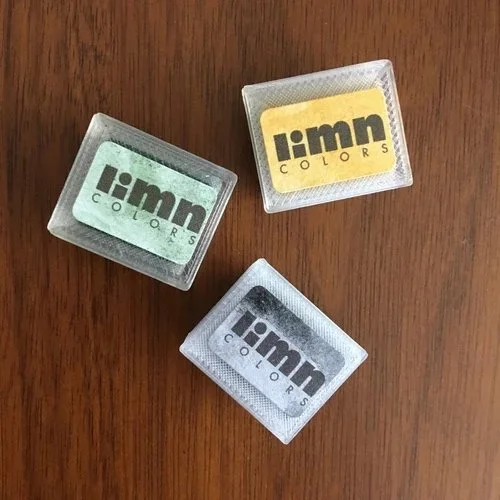
Paints are made from scratch, with premium pigments and no fillers, and packaged in 3d printed pans. The product line features historic and traditional colors alongside modern hues.
About Limn Colors Paint
Paintmakers have a lot of choices to make. How should the paint behave and how much, if at all, should we wrangle a pigment's natural properties? How should it diffuse in a wash, how moist is the paint in the pan, how should we package? What colors should we offer, and as a follow-up, do people really need that many options for yellow?
Our decisions in creating Limn Colors watercolor paints ultimately come down to what makes every pigment, on its own, special. We celebrate the materials used and create things that bring joy to people who create things!
Learn more about our paints in an interview with FLAX art & design.
If you are wondering about our name: limn (pronounced lim, the n is silent) is a late Middle English verb that means to describe in painting or words, to suffuse with a bright color or light.
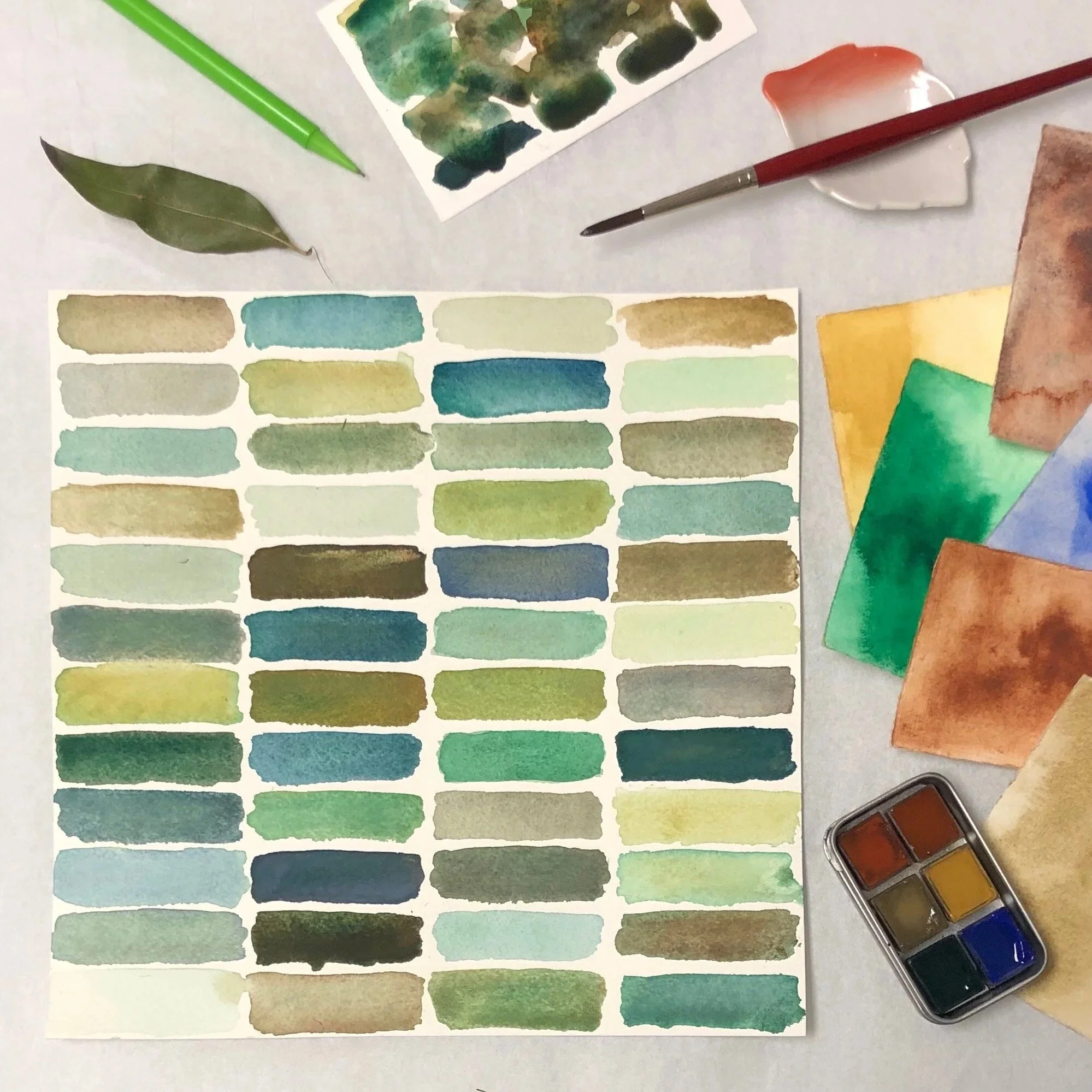
Ingredients
Limn Colors watercolor paint is made from pigment mixed with Limn Syrup watercolor binder. The binder consists of a propriety mix of ingredients rooted in paintmaking traditions.
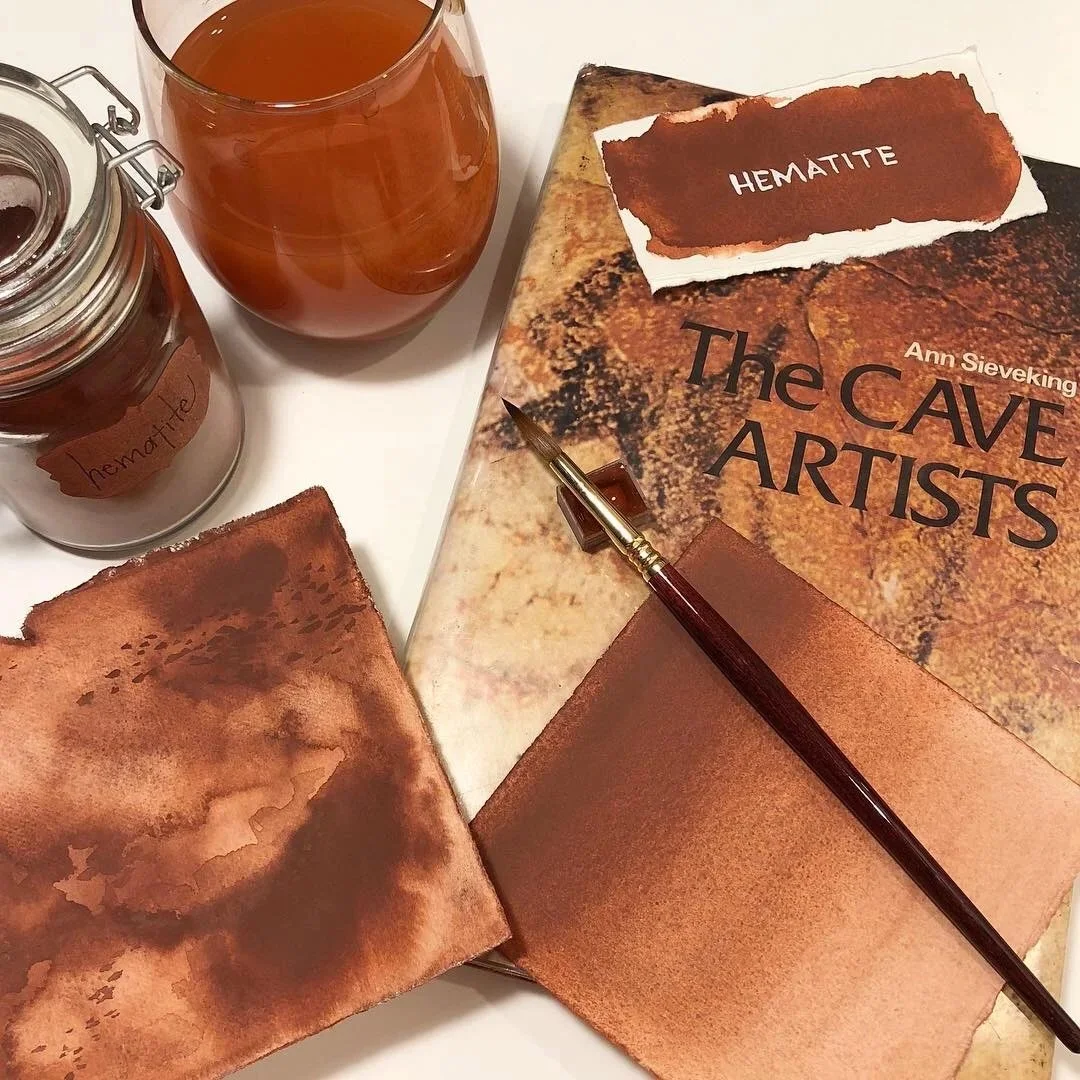
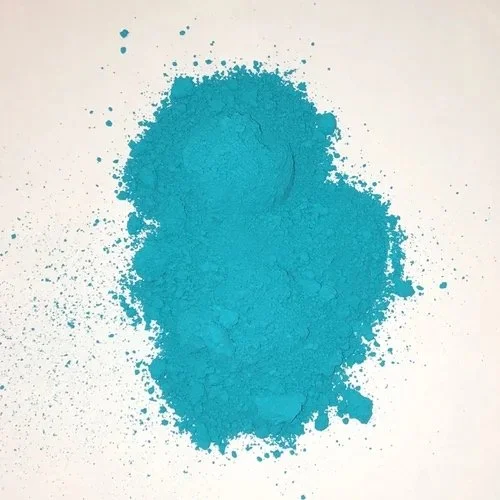
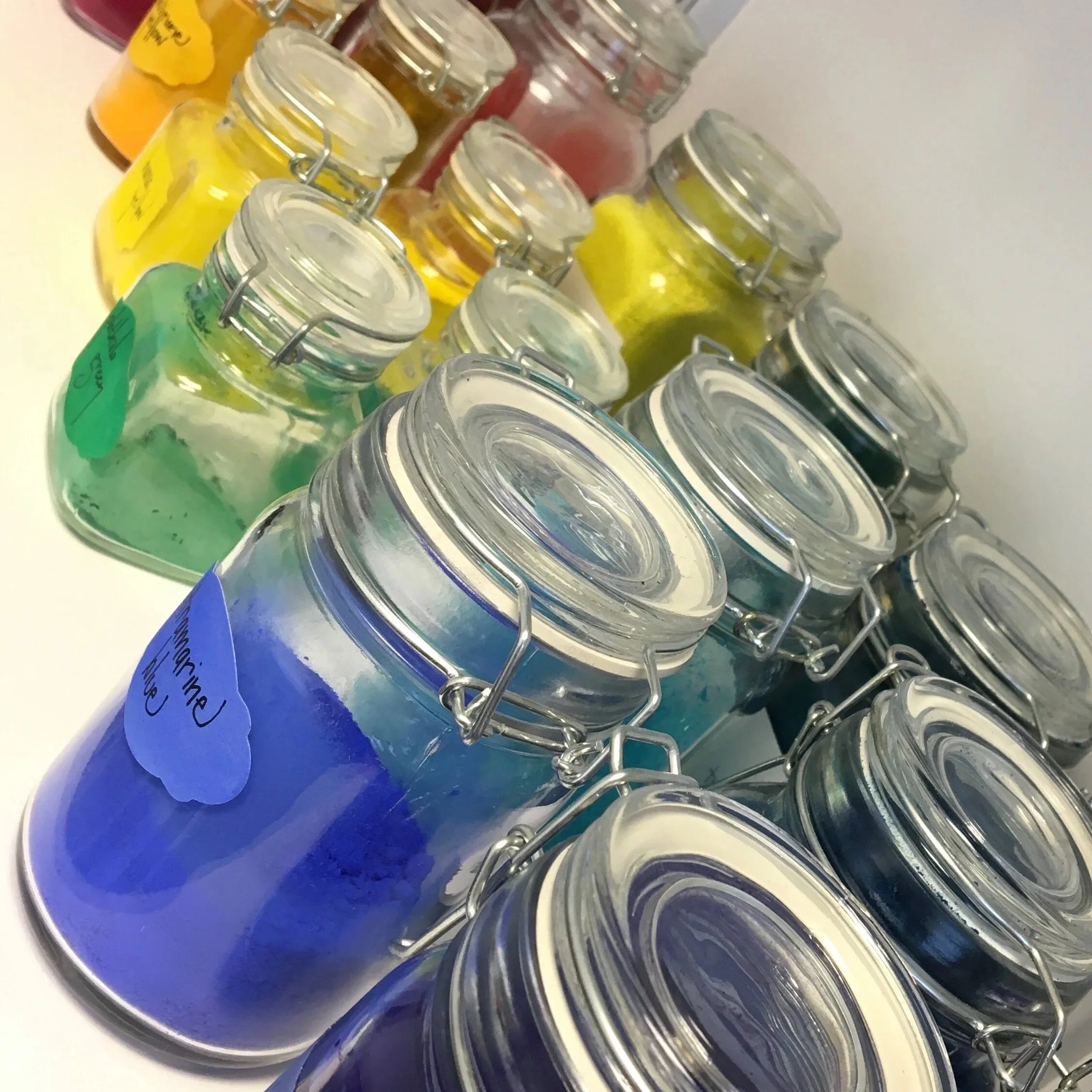
Pigment is the paint's colorant, made synthetically or from minerals and earth
Gum arabic, the resin of the acacia tree, makes the pigment stick to the paper and not rub off like chalk; gum arabic increases solubility, gloss, transparency, and color intensity
Glycerol is a plasticizer, which helps rewetting of the gum arabic in pan paints and keeps the paint from being too brittle
Honey is a humectant that draws moisture from the air so the paint doesn't turn into a rock; honey also helps keep pigment mixed into the paint base
Clove oil is a fungicide; a minute amount is used to preserve the paint while it is curing in the pans
Different pigments require different amounts of binder, but each of our paints uses only the five ingredients above.
Production Process
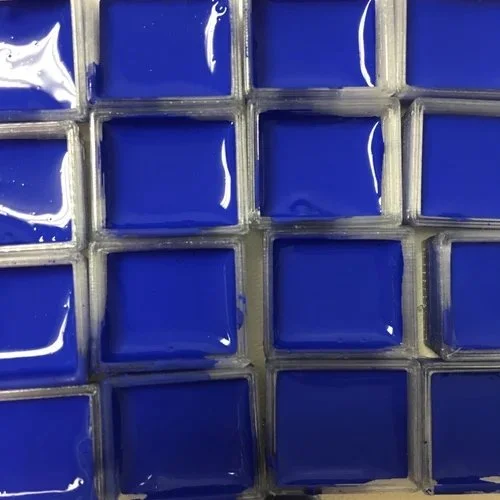
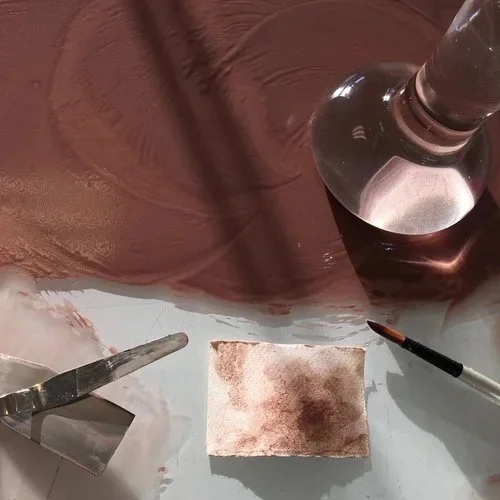
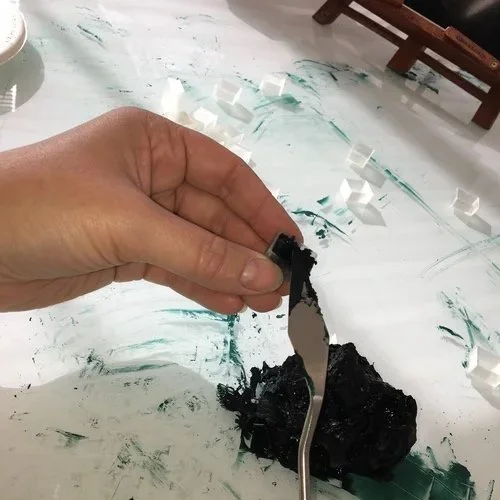
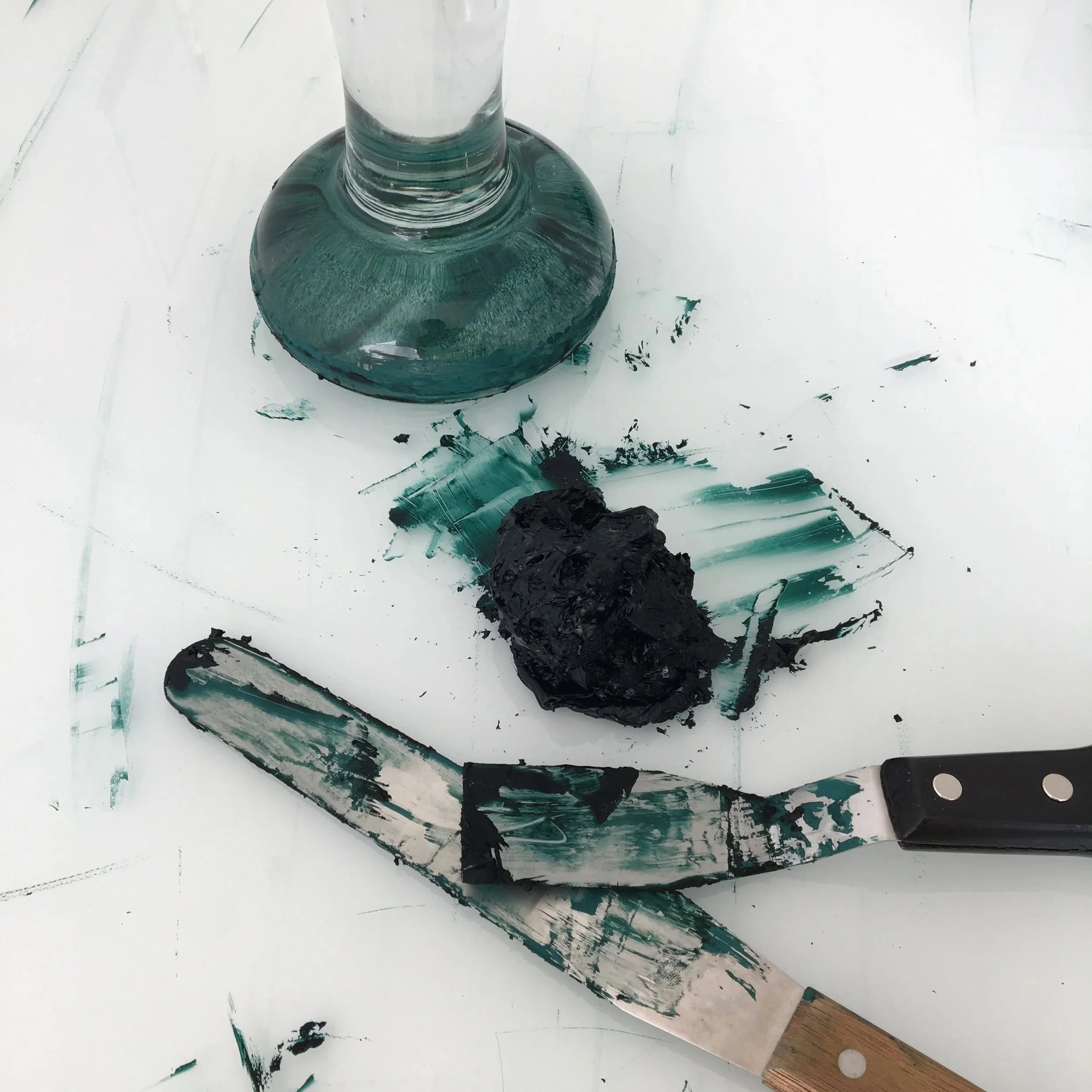
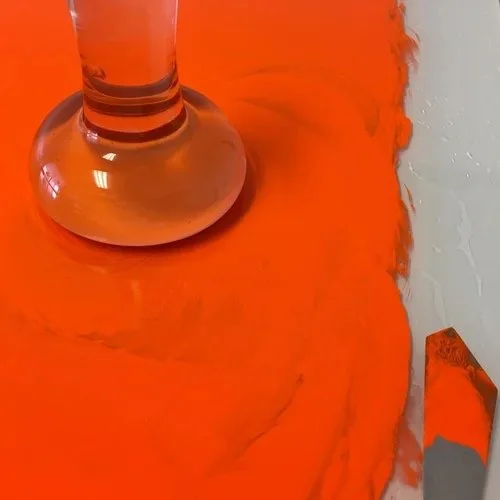
For each small batch of paint, the pigment and Limn Syrup are mixed into an even dispersion. The paint is pushed into a thin film between a heavy glass muller and a tempered glass workbench, which ensures every particle of pigment is covered in binder. For micronized, ultrafine pigments, the paint is pre-mixed in a three roll mill to break down agglomerates before hand mulling. Once the paint has reached the correct consistency and smoothness, it is transferred to the pans. Each time the paint in the pan shrinks, we top it off with more paint. This curing stage usually takes two to four weeks, and by the time the paint is complete, the little pan contains a lot of concentrated paint! Finally, we clean up the container, slide on a lid, and add the painted labels. Every pan gets a lot of love, time, and attention as it goes from raw materials to packaged treasure.
3D Printing
Yes, we even make the plastic boxes that the paint comes in! We 3d print the pans and their lids in-house with clear PLA filament on a pair of Prusa MK3s. You can check out this video for a glimpse of what the 3d printing process looks like.
PLA (polylactic acid) is a bioplastic made from plant material like sugarcane or corn, the same stuff that compostable forks are made of. When your pans are empty, you can reuse them, but ultimately when you are ready to dispose of our pans or lids, send them off for industrial composting.
Filler-free
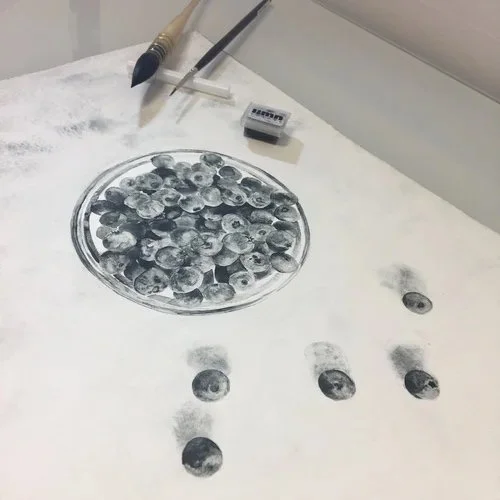
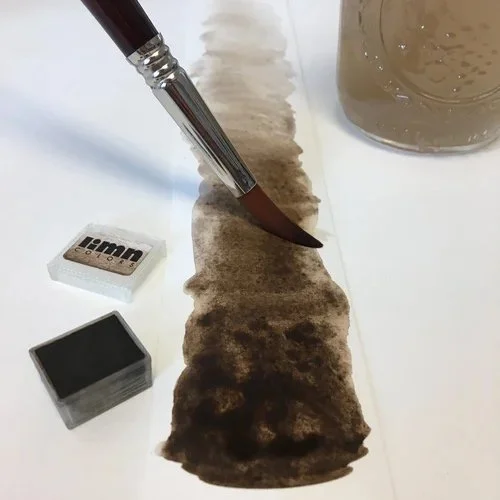
Limn Colors paints contain no fillers. This puts the spotlight on the unique and exciting properties of each pigment. So while that means that yellow ochre will be wildly different from phthalo blue in transparency, tinting strength, and opacity, that is the exact thing that makes us obsessed with pigments, paints, and color. We love the way that no one is the boss of cadmium red, that graphite literally shines, and that terre verte mutes bright colors into wonderful new shades.
Most major manufacturers add fillers and extenders, such as dextrin, to their watercolor paint to make the paints similar across their color line and bulk out the tube or pan. For example, they may add a lot of filler to strong pigments to dampen their tinting strength. That has the benefit of making the entire line more intuitive by creating similarities from color to color, but it's also a bit "lowest common denominator". That's not meant to criticize all of the amazing paint out there, but to explain how our paints may differ from those you've used before. It all comes down to your preferences and which qualities are most interesting to you in watercolor paint.
Permanence
Limn Colors paints are lightfast and suitable for artist use. Paints are either "excellent", which corresponds to 8 of 8 on blue wool scale or I by ASTM ratings, or "very good", which corresponds to 6-7 of 8 on BW or II by ASTM. Both of those permanence ratings are suitable for artists.
Some pigments may have different lightfastness ratings when applied diluted versus masstone. For example, applying some "very good" paints in higher concentration instead of light tints may improve its lightfastness to "excellent", whereas the opposite is true for other pigments. You can test paints yourself by painting out a graded wash, cutting the paper into two equal pieces, placing one in direct sunlight, and comparing the two samples over time.
Some paints, particularly those made from natural minerals can oxidize and change color. For example, vivianite can become greener when exposed to the air over long spans of time. Other iron oxides may change color if exposed to extreme temperature; just like raw sienna becomes the redder burnt sienna when roasted, other natural earth pigments can change if heated.
Protect your work with a frame fitted with UV-protective glass, particularly if you are hanging paintings near a sunny window. Buy the most stable and durable paper you can for your art. Papers can also darken, yellow, or break down over time, making your artwork deteriorate or show color changes regardless of the color stability of the pigments.
Single Pigments
When multiple pigments are used to make a single paint, it can end poorly. A manufacturer mixing white and red pigments to put pink on your palette may create a chalky, muted color. Or a violet made from a red paint and blue pigment might separate into its components in a wash if one pigment is heavier than the other (we love this effect, but not when it is unexpected or when you need an even, flat wash). Sometimes the downside shows up when you begin mixing colors, which can be a frustrating surprise. Say you have bright paints that produce muddy mixtures; there may be hidden pigments clouding your mix. None of that means you have to be a purist and blend everything yourself from a set of primaries. We understand the value of convenience colors, but all Limn Colors watercolor paints are made with a single pigment. Any pigment used is listed on the product’s page in our shop.
As a general rule, knowing the pigments in your paint, and their color properties like temperature and opacity, is a big step in being able to mix gorgeous, clear colors.
Storage
Half pans are familiar sizes if you buy pan paints. Though there is no single standard, our containers fit most palettes that hold pans, such as snap-in bijou boxes.
Each pan come with a plastic lid that slides off to the side. The lid was designed to offer protection during shipping without sticking to the paint like a paper wrapper might. You can send the lid off for composting (see 3d printing section above) if you don't want to store your paint pans individually.
For magnetized pans, slide the lids off and place the open pans into the metal box. In most cases, the pans will not fit in the case with their lids on.
Whether you store your paint in a palette or with its shipping lid, you should let the pan dry out after each painting session before closing it up.
Cracks
Surface cracking on watercolor paints is natural and expected. As watercolor dries in the pan after production or a painting session (or squeezing tube paints into a palette or pan), the paint will contract as the water inside evaporates. Cracks are merely cosmetic, but if you hate the look of them, you can compress slightly moistened paints with a knife or other tool.
Swatch Accuracy
We strive to make the swatches and images on our site as close as possible to the actual paints. It's both fascinating and frustrating how different physical and digital color spaces are, particularly since all monitors and screens vary. Expect a little discrepancy between screen and paper. Please contact us with any questions.
Pricing
Paint prices vary by the pigment in the pan and the work involved in the paintmaking process. Some pigments are rare or difficult to create or extract from the earth, and thus more expensive. And some pigments take much longer to disperse, demand additional handling or disposal safety, or require more effort to complete.
WHY SUPPORT OUR SMALL, HANDMADE BUSINESS?
Part of what makes handmade goods special is the magic and love they are imbued with by the maker. As cliche as it might sound, the individuals skillfully building these products do put a little of ourselves into each one. We are passionate about what we make and devoted to ensuring your have a fantastic experience with our products. We take care of you like our jobs depend on it!
Handmade products are often higher quality, made with better ingredients, superior craftsmanship, intention, and concern for each individual piece. For example, our watercolor paint has incredibly high pigment levels and we don’t add junk to bulk it up - you’re getting a purer product that goes further and works better. It’s really neat, both in terms of attention to detail and its cool factor.
Handmade items are cherished more by their owners, with deeper engagement. You buy our paint and art supplies because you delight in getting to know each color; you are very nerdy about materials; you feel a connection to our art community; it helps you become who want to be.
Your purchase of a handcrafted good reflects a little about you - the things and experiences that bring you joy as well as your respect for individual creativity, your appreciation of high quality and unique goods, and your belief in us and our work.
From our team, thank you so much for being a part of Limn Colors!
WHAT DO YOU VALUE?
I have saved up for a fountain pen that was a significant investment. Most people would think it a crazy amount to spend on a pen when they could get a 12-pack at the dollar store. The pen is beautifully made with shell inlay and laquered by hand; it did and continues to write smoothly and pleasurably; I enjoy filling it with different inks and how it feels to hold; and it makes me happy to use whether I am making a shopping list, signing an important document, journaling, or strategizing for my business. The price matched what I valued.
We make these kinds of value-vs-price decisions each time we make a purchase, particularly when it’s not a commodity or table stakes for survival: a special meal or night out with friends, a high-quality fishing pole, travel or a family vacation, a great set of kitchen knives, that coveted addition to your collection of movies/tchotchkes/antiques/etc, a newly released video game, the comfiest recliner.
For many of our customers, art supplies and the items related to their creative work are an important personal, as well as professional, choice. Artists and craftspeople become enamored with certain pottery glazes, remain loyal to a particular paper that fits their painting style, seek out tools that feel perfect in their hand, and find a yarn that feels as amazing running through their fingers as they work as it does to wear the finished product. If what we are making aligns with what you value, we would be honored to have you as a customer, supporter, and part of our community!
WHY DOES HANDCRAFTED SEEM EXPENSIVE?
People ask for more durable, higher quality goods, desire unique, beautiful items, and commend the ideal of American manufacturing or shopping at small businesses, but there can still be a disconnect between requested value, assessment of worth, and expected price.
Sometimes the knee-jerk reaction to the pricetag on handmade goods is an assumption that it is overpriced, when in fact it might be a fair, or even low, price to pay when you look deeper. When compared to mass-market goods, items imported from areas that don’t pay a fair living wage, and low-quality products from discount retailers, artisan goods are more expensive.
The following does not, and can not, address your individual budget or what you are willing to pay for something, but provides a big picture view of what factors into pricing. Directly, there are the cost of raw materials and the cost of labor (payroll, workmans comp, benefits, taxes) for manufacturing products, packing and shipping, customer service, bookkeeping, etc). There’s overhead for having a business: studio rent, utilities, equipment, tools, furniture, and operations supplies. Add in the costs for licenses and fees to do business, legal, accounting, and insurance. Plus, costs for product development and R&D. To delivery to customers, there are costs related to packaging, 3d printing, and printing, along with technology expenditures like website costs, software, and payment processing. The company must turn some profit, not only to stay in business, but to reinvest, grow the available offerings, and continue improving products and service. All of those are rolled into the wholesale price, which is either marked up by a retail shop or used to directly invest in finding and connecting with customers, including marketing, advertising, demoing, and selling at or hosting events.
All that being said, the bottom line is that our prices reflect the work, materials, expertise, and time that goes into both the products that we produce in-house and the pieces made by our artist and maker partners. We work at Limn Colors because we love what we do, care deeply about the products we create, and want to make a living by being a small part of your creative endeavors.
Color Codes
A sticker on the side or bottom of each pan shows the item number, which contains a 4- or 5-letter abbreviation of the color name: CAMO for caput mortuum, QUMA for quinacridone magenta, etc. Below is a list of the abbreviations and the corresponding color names for each of our paints.
CURRENT LINE OF COLORS
AZGR azo green
BEYE benzimida yellow
BUSI burnt sienna
BUUM burnt umber
CAMA cadmium maroon
CAMO caput mortuum
CARE cadmium red
CAYE cadmium lemon
CHBK chromatic black
COAQ cobalt aqua
COBL cobalt blue
COVI cobalt blue-violet
DIVI dioxazine violet
EAGR green earth
EAGY gray earth
EAPI mauve earth
GRGY graphite
HERE hematite
INBL indanthrone blue
IOBK iron oxide black
ISYE iso yellow
IVBK ivory black
LIYE limonite
MABK magnetite
MCGR malachite
MTCO metallic copper
MTGO metallic gold
MTPE metallic pearl
MYBL mayan blue
NEBL neon blue
NEGR neon green
NEPI neon pink
NEYE neon yellow
PEMA perylene maroon
PHBL /or PHbBL phthalo blue
PHGR or PHyGR phthalo green
PHBGR phthalo emerald
POPI potters pink
PYOR pyrrole orange
PYRE pyrrole red
QUMA quinacridone magenta
QUOR quinacridone orange
RASI raw sienna
SEGR serpentine
TIBU titanium buff
TIWH titanium white
TVGR terre verte
UDVI ultramarine dioxazine violet
ULBL ultramarine blue
ULVI ultramarine violet
VEGR verona green earth
VIBL vivianite
VIGR viridian
OCYE or YEOC yellow ochre
Safety Precautions
Take precautions to keep paint off of and out of your body and keep out of reach of children, pets, and others known to make bad decisions.
Limn Colors is one of the only boutique paintmakers that undergoes toxicology testing to comply with US laws for FHSA, LHAMA, and ASTM D-4326. We care deeply about our health and yours!
SAFE HANDLING PROCEDURES
By purchasing our paint, you agree to be a responsible adult and use the product on paper as intended. Paints should be handled with appropriate caution, only by people who are able to read, understand, and follow the safety precautions. Keep out of reach of children, pets, and those known to make bad decisions.
Do not ingest or aspirate paint or related dust or liquid.
Do not use paint as makeup or body paint.
Store paint in a safe location where it cannot be confused for food or cosmetics.
Take precautions to keep paint off of skin, eyes, mouths, etc. Do not hold your paintbrush in your lips. Do not have food or drink in your painting area; do not smoke in your painting area; do not otherwise do things while painting that bring your hands or other items up to your mouth and eyes. If you are straw-spattering or using a mouth atomizer, don't inhale, and avoid spray methods with paints that contain material advisements.
If eye or skin contact occurs, rinse with clean tap water immediately and completely. If irritation persists, seek medical attention.
Clean up thoroughly after each painting session.
Proper disposal will limit the environmental impact of paint. You can keep paint rinse water out of waterways by pouring it into a large bucket full of sand stored in sunlight, which traps pigments but allows the water to evaporate out. Used paper and cleanup materials can be stored separately until you have enough for drop-off or pick-up with your local recycling or disposal center.
TOXICOLOGY + HEALTH WARNINGS
In conformance with US law—FHSA, LHAMA, and ASTM D-4326—Limn Colors has had art material formulations evaluated by a certified toxicologist for their potential to cause acute and chronic health effects.
Limn Colors paint is an irritant if ingested, aspirated, or comes in contact with eyes, and can cause irritation to skin for some people.
The State of California requires Prop 65 warnings on products containing chemicals that have been shown to cause cancer, birth defects, or other reproductive harm: cadmium used in cadmium paints, cobalt used in cobalt paints, airborne particles of carbon black pigment used in ivory black paint, palygorskite clay used in mayan paints, and titanium dioxide pigment used in titanium white, titanium buff, metallic gold, and metallic pearl paints. Those ingredients can have chronic health effects.
The toxicology results for our paints concluded that even though some products may contain hazardous substances, they do not require CA-65 or health warnings when complexed with other materials (for example, titanium dioxide is in toothpaste) and in specific exposure scenarios (such as in small quantities or when using paint rather than handling powdered pigments with airborne particles).
The toxicologist reported that, of the pigments listed above, only mayan red, mayan blue, mayan yellow, and mayan green warranted FHSA/LHAMA and CA-65 health warnings. This is because those pigments have a proprietary formula that could not be assessed fully.
Pigments have not been tested to determine the manganese levels in siennas or umbers, nor the potential for PCBs in phthalo blue and phthalo green.
This is not an exhaustive list of potentially harmful materials used in art supplies, and does not cover other manufacturers.