
Caput Mortuum
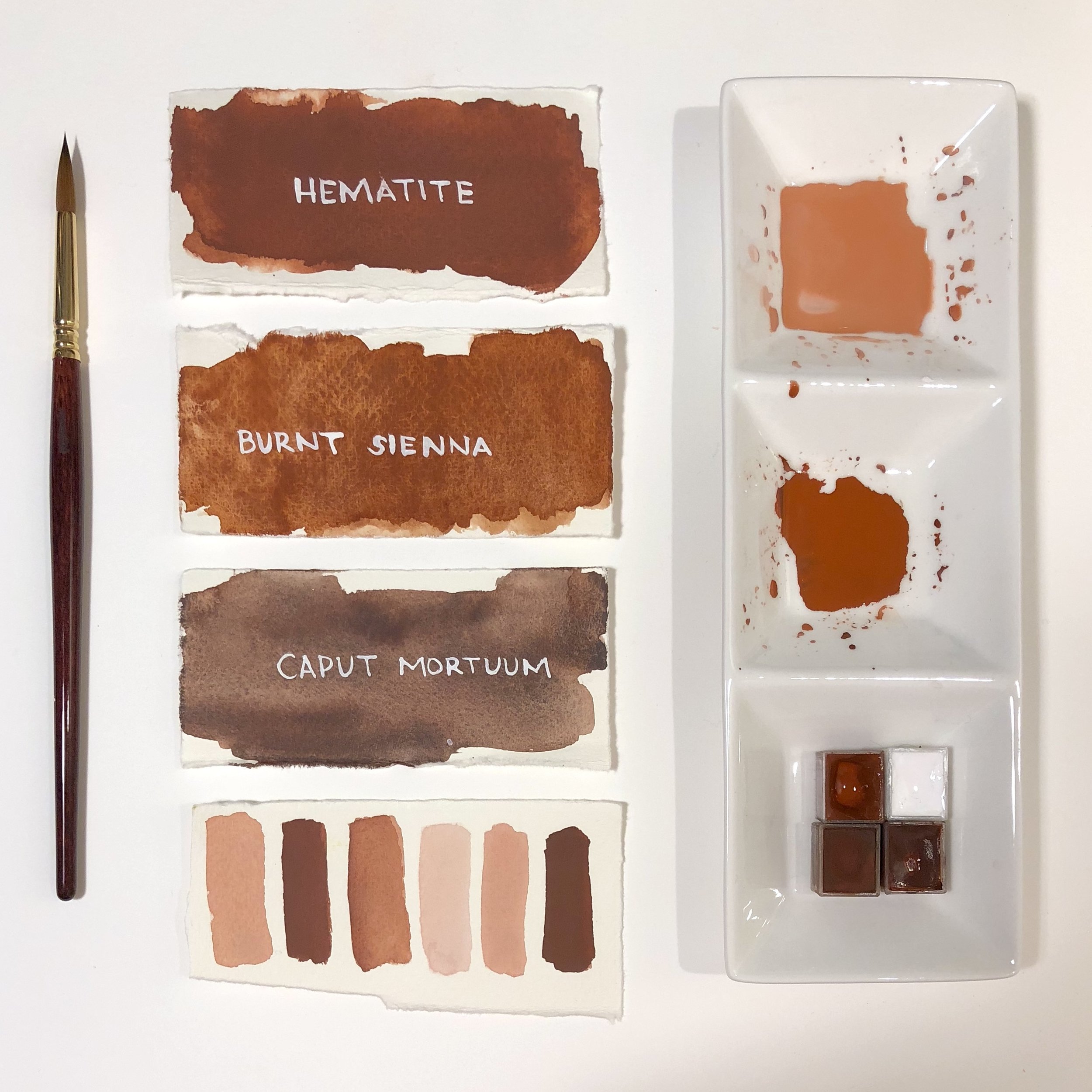
Caput mortuum is a rich brown earth pigment, a personal favorite that has earned a permanent place on my watercolor palette. In masstone, it’s a purplish cocoa, and the natural sparkles in the pigment are apparent. Wet washes bring out dark granulation, violet tones, and red blooms. It’s one of those paints that my brush gravitates towards, good for neutralizing greens, adding depth to reds, and as a complex dark brown on its own.
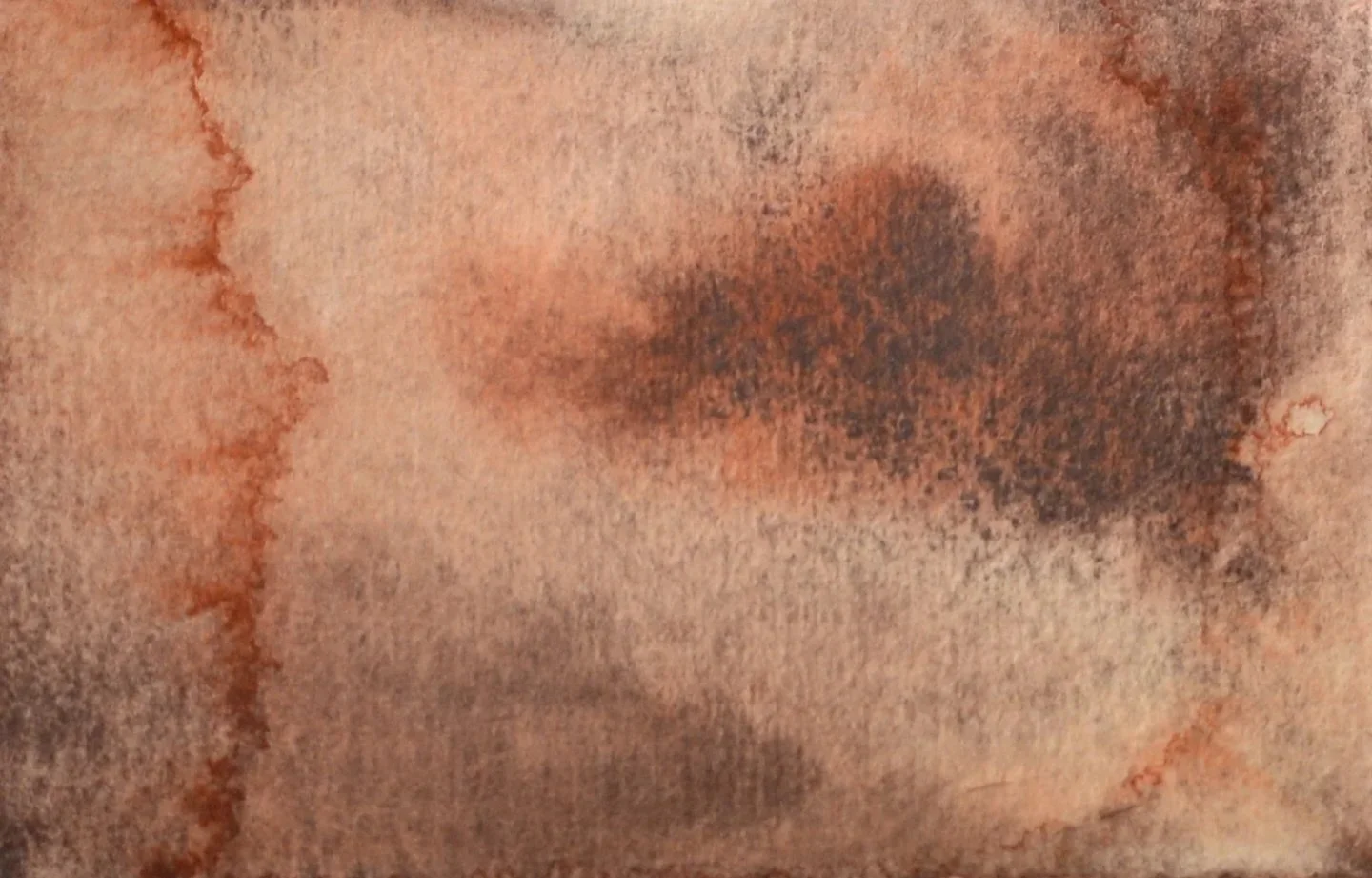
Caput mortuum has a mind of its own.
A diffused wash shows dark granulation, violet undertones, and red blooms.
History of Hematite and Caput Mortuum
Hematite is what gives red ochres, as well as some modern cosmetics and the planet Mars, their color. Cave paintings were colored with the mineral tens of thousands of years ago; Greek and Native American warriors would go into battle smeared with the pigment; and it was indispensable to Renaissance painters who mixed it with white to create flesh tones.
The origin of the phrase “caput mortuum” is up for debate. Some paint makers propose that it is from the Roman “head of the dead” because of its resemblance to dried blood or from “death’s head” due to producing the pigment from the dying embers of iron salts. Most frequently, it is said to be from the alchemic term “dead head”, notated with a skull icon, referring to the useless substance, such as iron oxide a.k.a. rust, produced in alchemy projects.
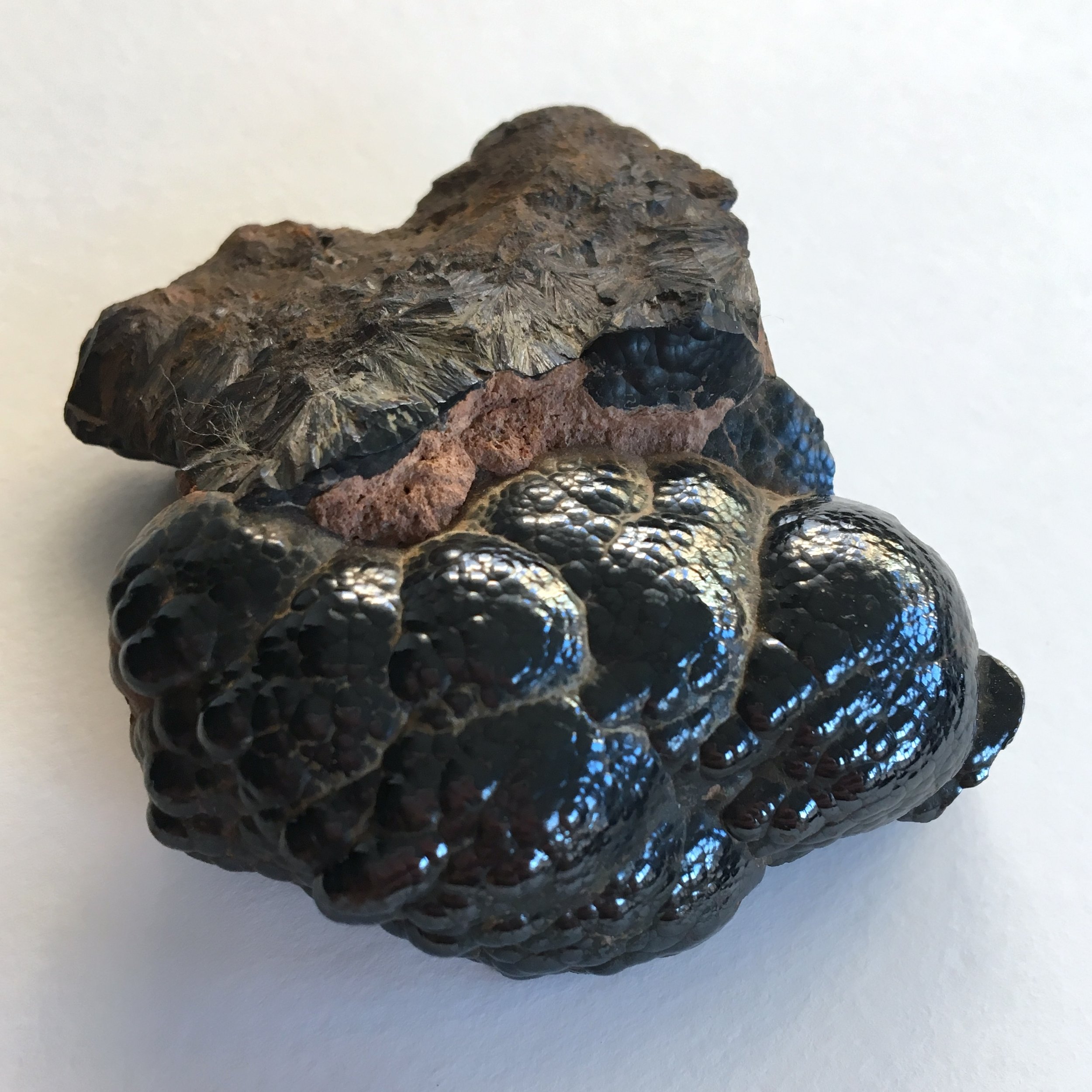
In nature, hematite can be shiny silver-grey or dull rust red, sharp-planed crystals or bumpy ooids, but all produce a red-brown powder when pulverized, which is where the Greek name “blood stone” derives from. Today, it is far more popular for paint manufacturers to use synthetic iron oxide pigments instead of actual earth.
Skeletons in the Closet
Related paint colors include violet hematite (for the mineral version), mars violet (the common name for the collection of synthetic iron oxide pigments), and cardinal purple (because it was used to paint religious robes). Or more interestingly, mumia/mommia, Egyptian brown/violet, or mummy brown/violet (a pigment made from ground-up mummies). Wait, what?! Yep, in the 1700s and 1800s, painters from Delacroix to Drölling slathered their canvases with corpses.
In his 1890 handbook The Chemistry of Paints and Painting, Sir Arthur Church recounts, “A London colourman informs me that one Egyptian mummy furnishes sufficient material to satisfy the demands of his customers for twenty years.” But not everyone had taken the name literally and it came as a shock to discover that “Soylent Green is people!” In the 1870s, young Rudyard Kipling witnessed his uncle, painter Edward Burne-Jones, “with a tube of ‘Mummy Brown’ in his hand, saying that he had discovered it was made of dead Pharaohs and we must bury it accordingly”. It was only 50-some years ago that colorists ran out of mummies, and the market for the grisly paint, which was barely limping along anyway, was officially kaput.
Sources and Further Reading
If you’d like to dig deeper into this story, much has been written on the fascinating history of mummy brown:
The Life and Death of Mummy Brown – Journal of Art in Society
The 16th Century Paint Made from Ground up Mummies – Ancient Origins
Other sources used in this article:
Originally posted to the Limn Colors blog, which I have closed.